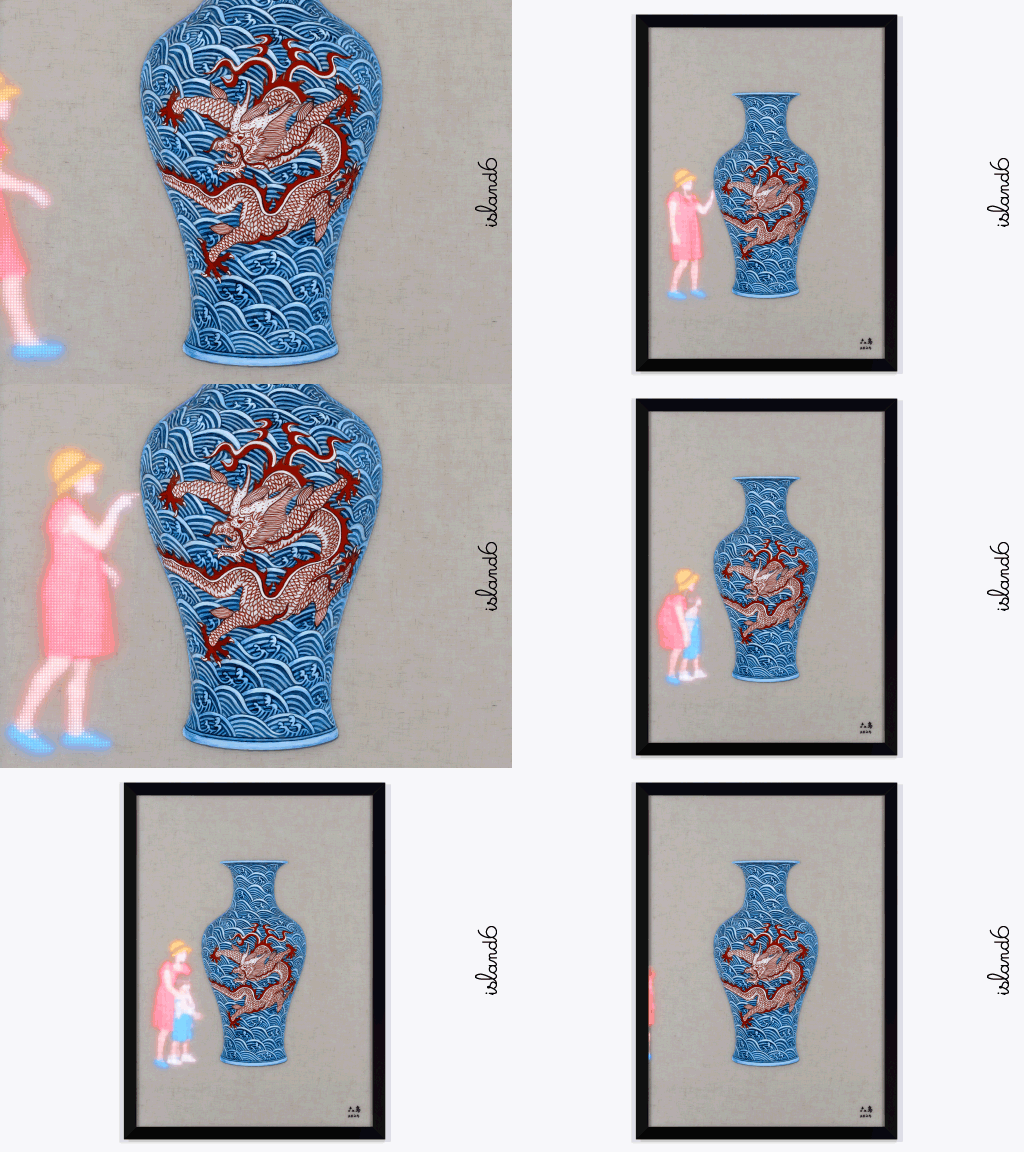

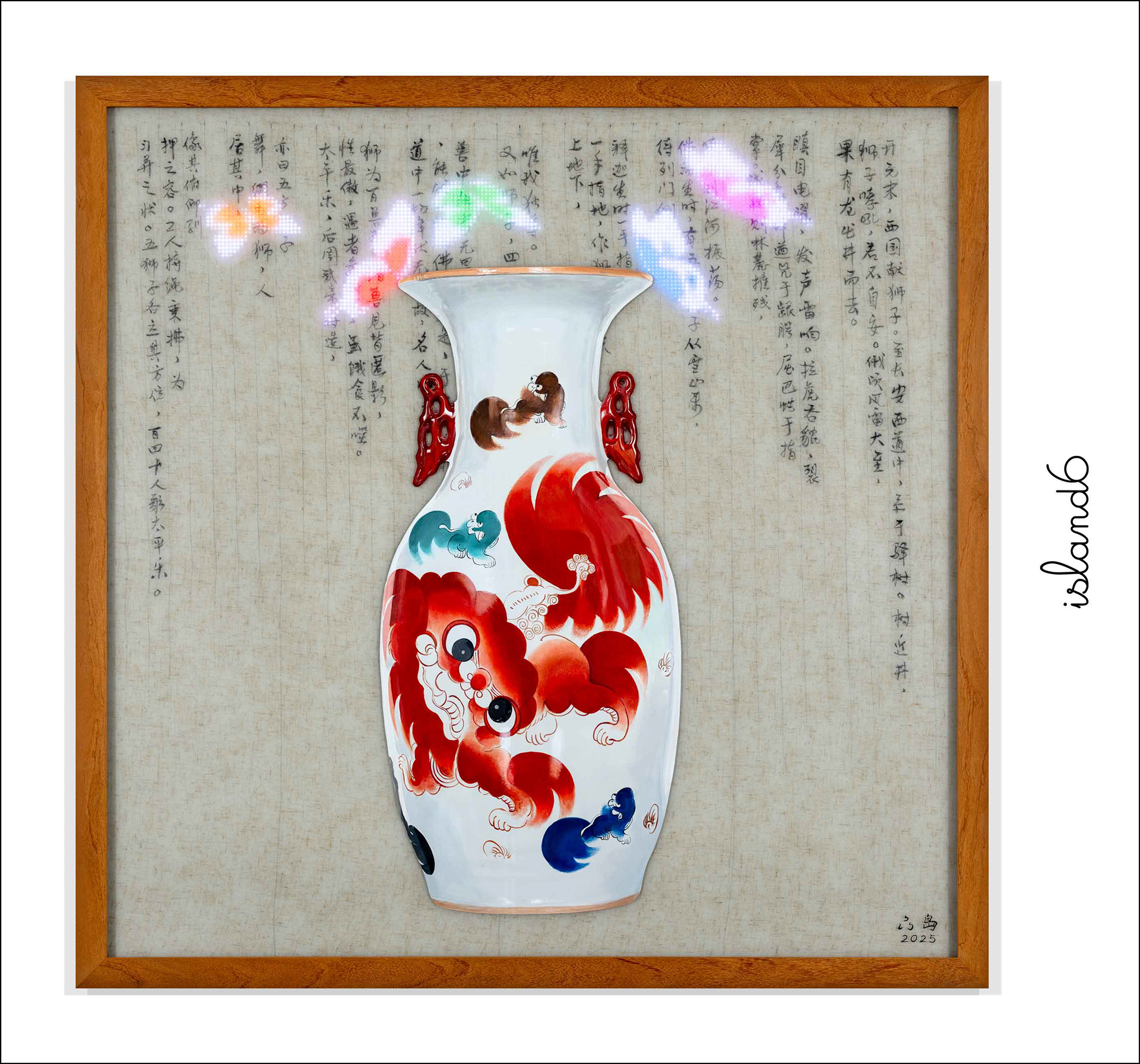
"Foo Dog Porcelain" (石狮梦蝶)
// BLURB //
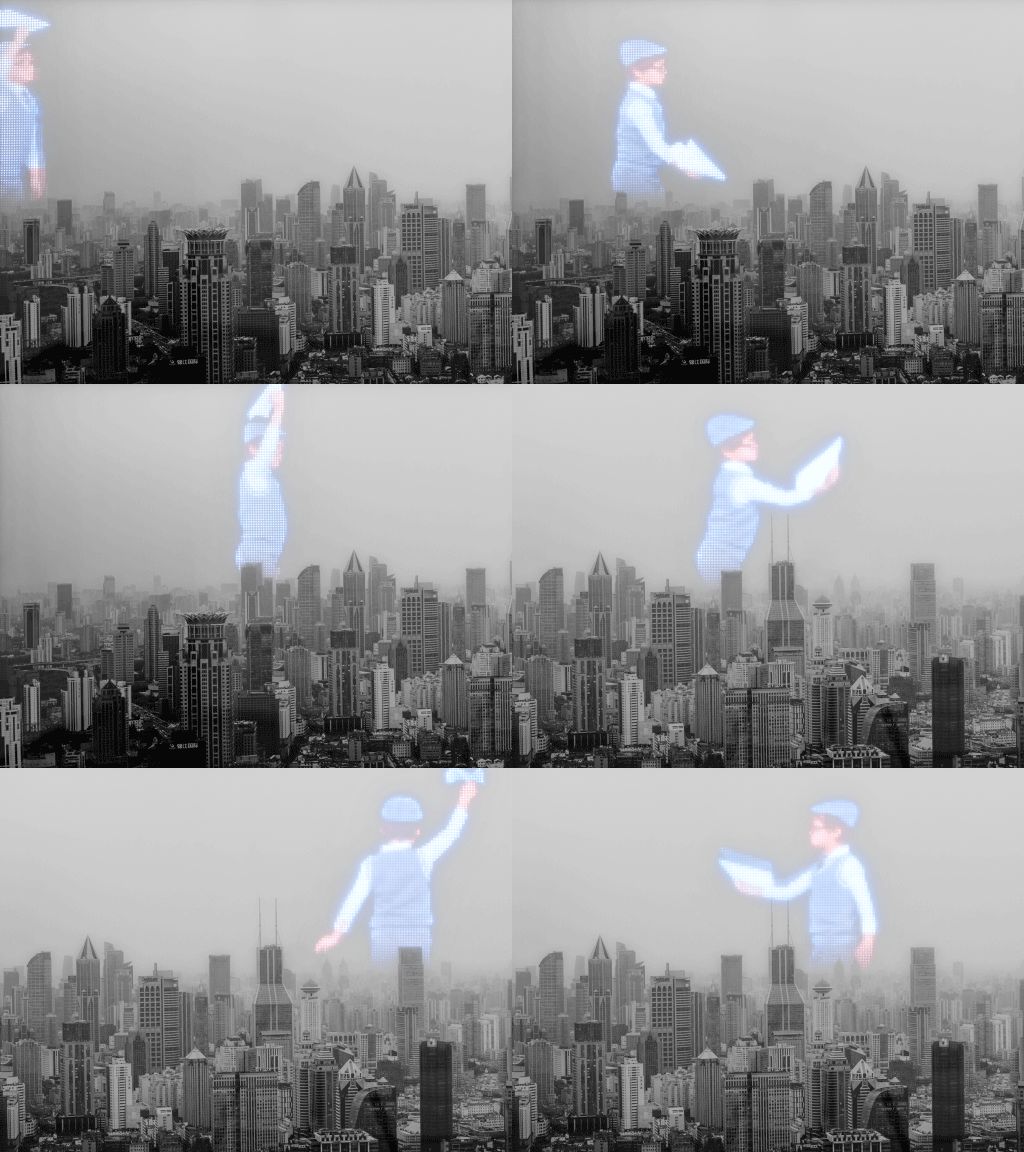
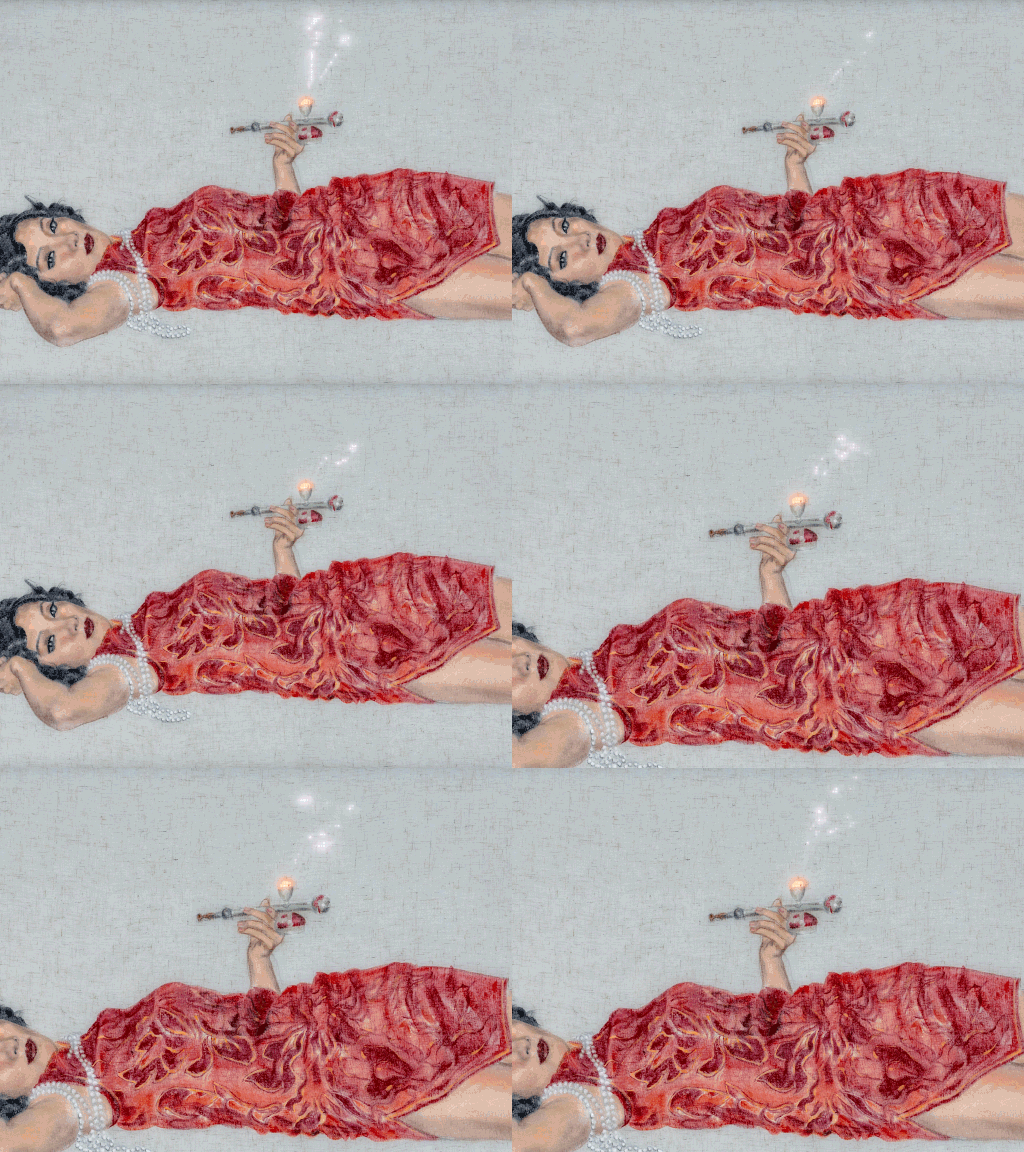
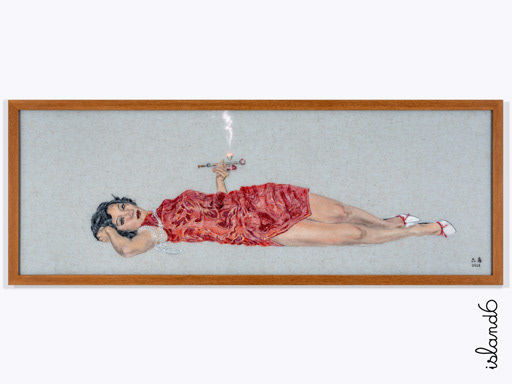
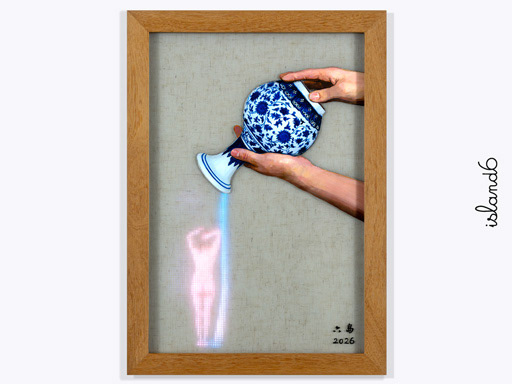
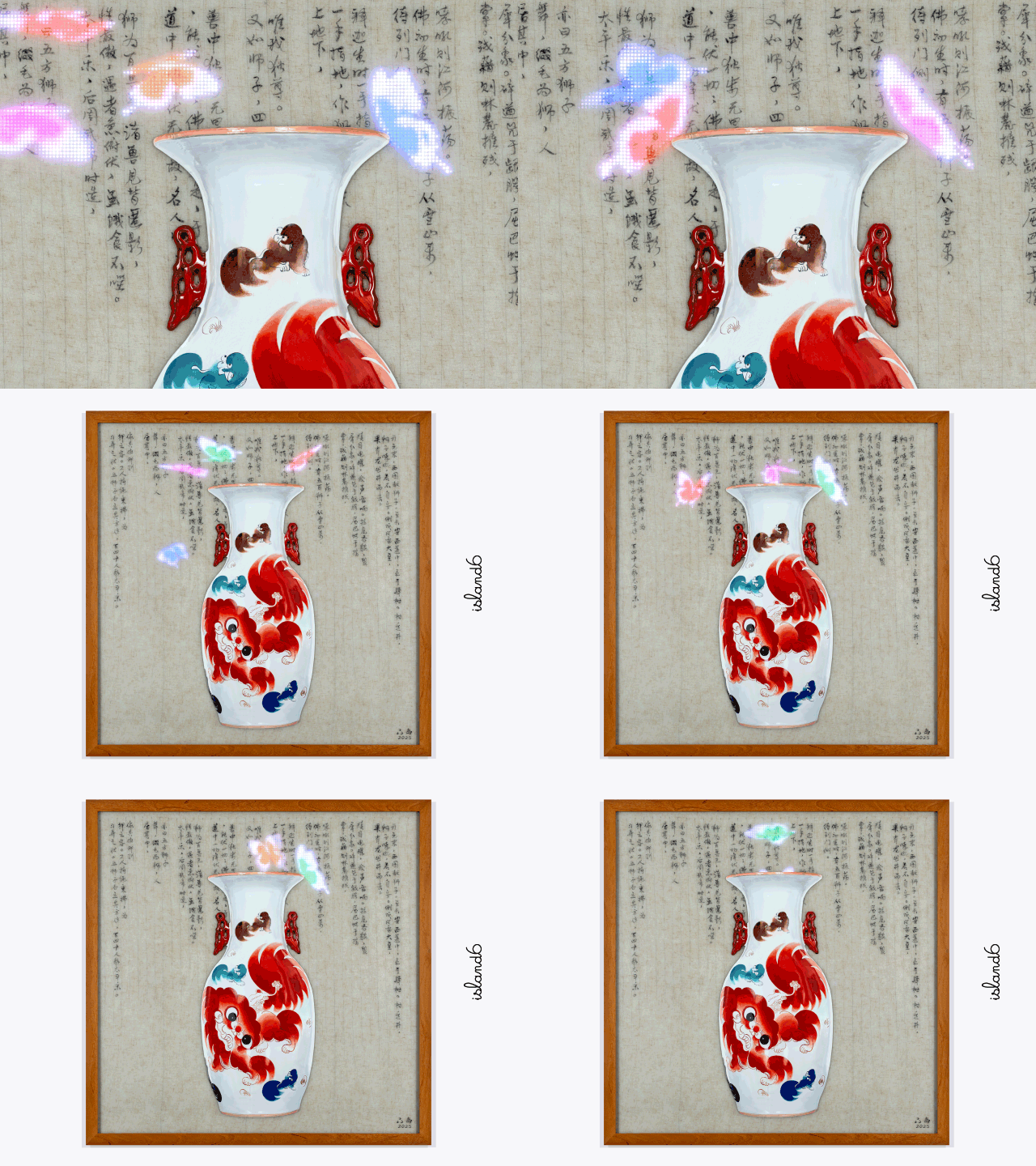
In the hush between sunlight and shadow, a butterfly drifts, a whisper of the eternal, a question from the old masters. Zhuangzi once dreamed he was a butterfly, then woke uncertain if he was a man or a winged spirit. Perhaps we are all caught in that same dream, moving softly through a world that never quite holds still. The butterfly teaches without words that transformation is not loss, but the natural language of being. Life unfolds in layers. One moment fragile, another fierce, and somewhere in between, we learn to surrender to change to the gentle ache of becoming more.
At the gate stand the Foo Dogs, stone and steadfast, guardians of all that wish to remain. They face outward, protecting what endures, while the butterfly moves inward, exploring what dissolves. One speaks of strength, the other of release. And between them lies the art of living: to be rooted, yet willing to drift. Perhaps wisdom is not found in answers, but in that balance, the courage to guard what matters, and the grace to let the rest take flight. For even the Foo Dog, beneath its painted roar, must dream sometimes of wings.
EDITION, MEDIA, SIZE & WEIGHT
One-of-a-kind work, issued as a unique edition, Shanghai 2025
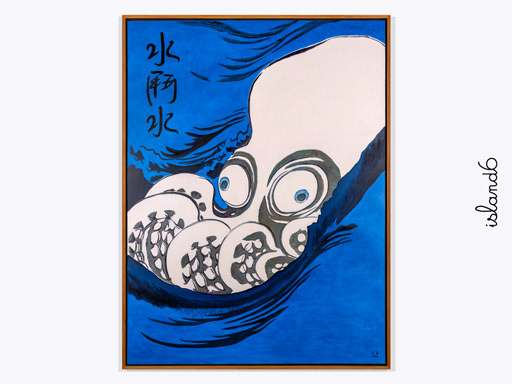
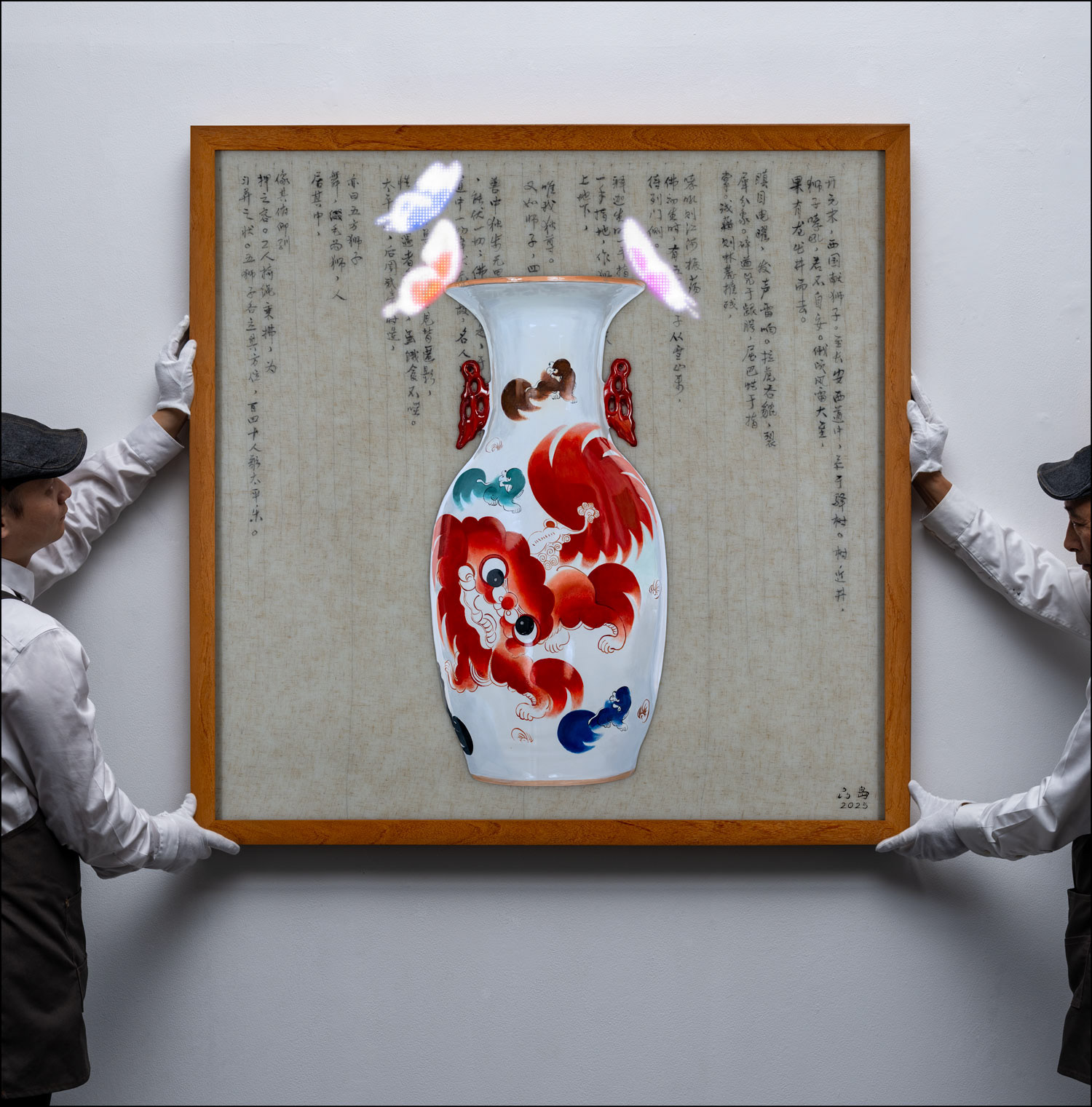
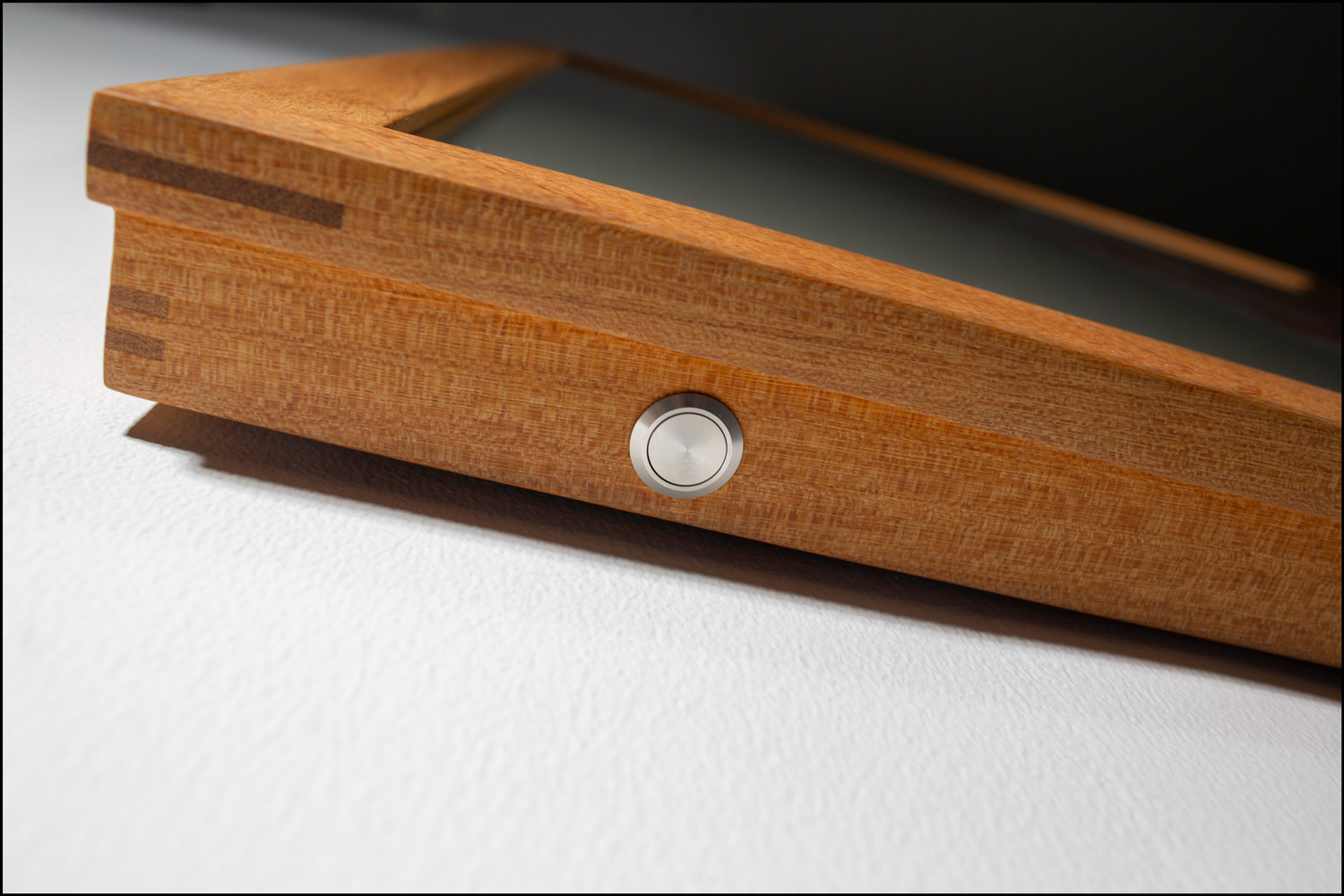
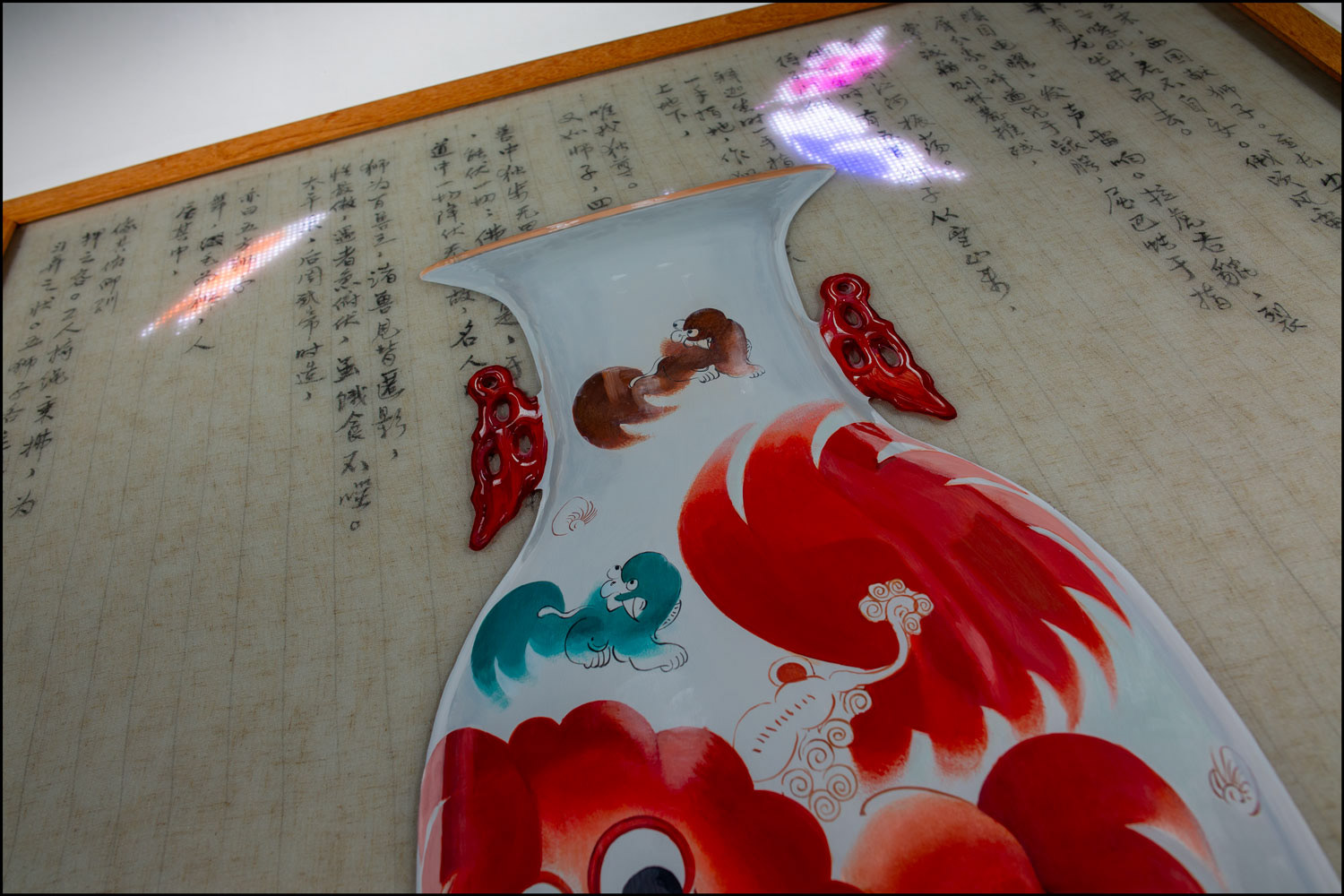
RGB LED display, acrylic painting on Plexiglass, Chinese ink on Vietnamese linen embedded in hand cast resin, teakwood frame
120(W)×120(H)×5.5(D) cm // 54kg
CRATE SIZE & WEIGHT
135(W)×135(H)×21(D) cm // 102.5 kg
EXPOSURE
“Yaoguai” at island6 Shanghai
CREDITS
Wang Chuanwen 王传文 (painting) • Shengqiu Li 李生秋 (calligraphy) • Helen Chen 陈韵涵 (art direction) • Thomas Charvériat (art direction) • Yeung Sin Ching 杨倩菁 (production supervisor) • Tiara Alvarado-Leon (blurb)
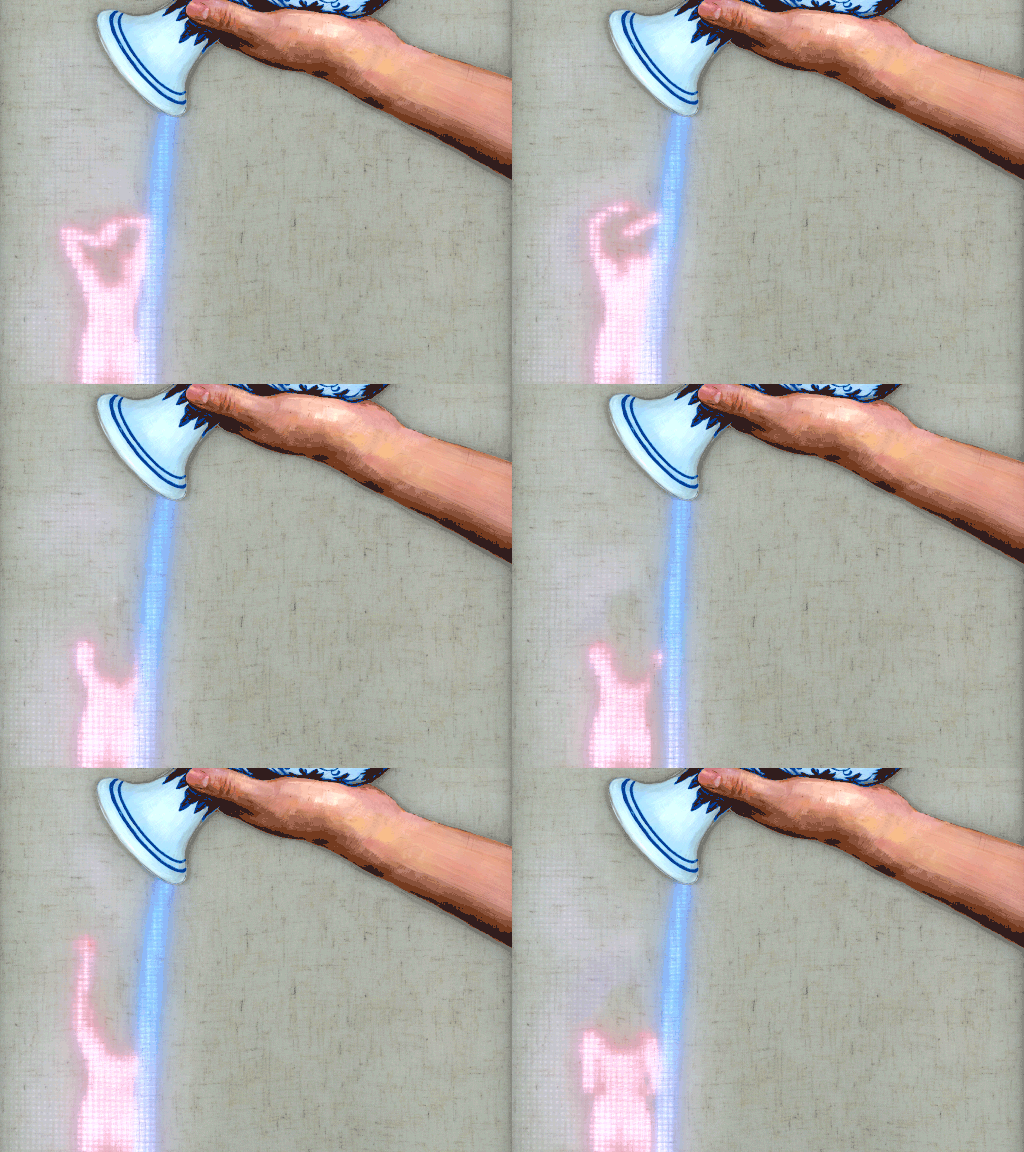
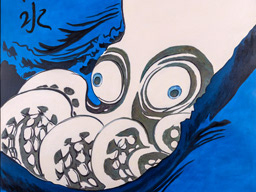
CLOSE-UPS

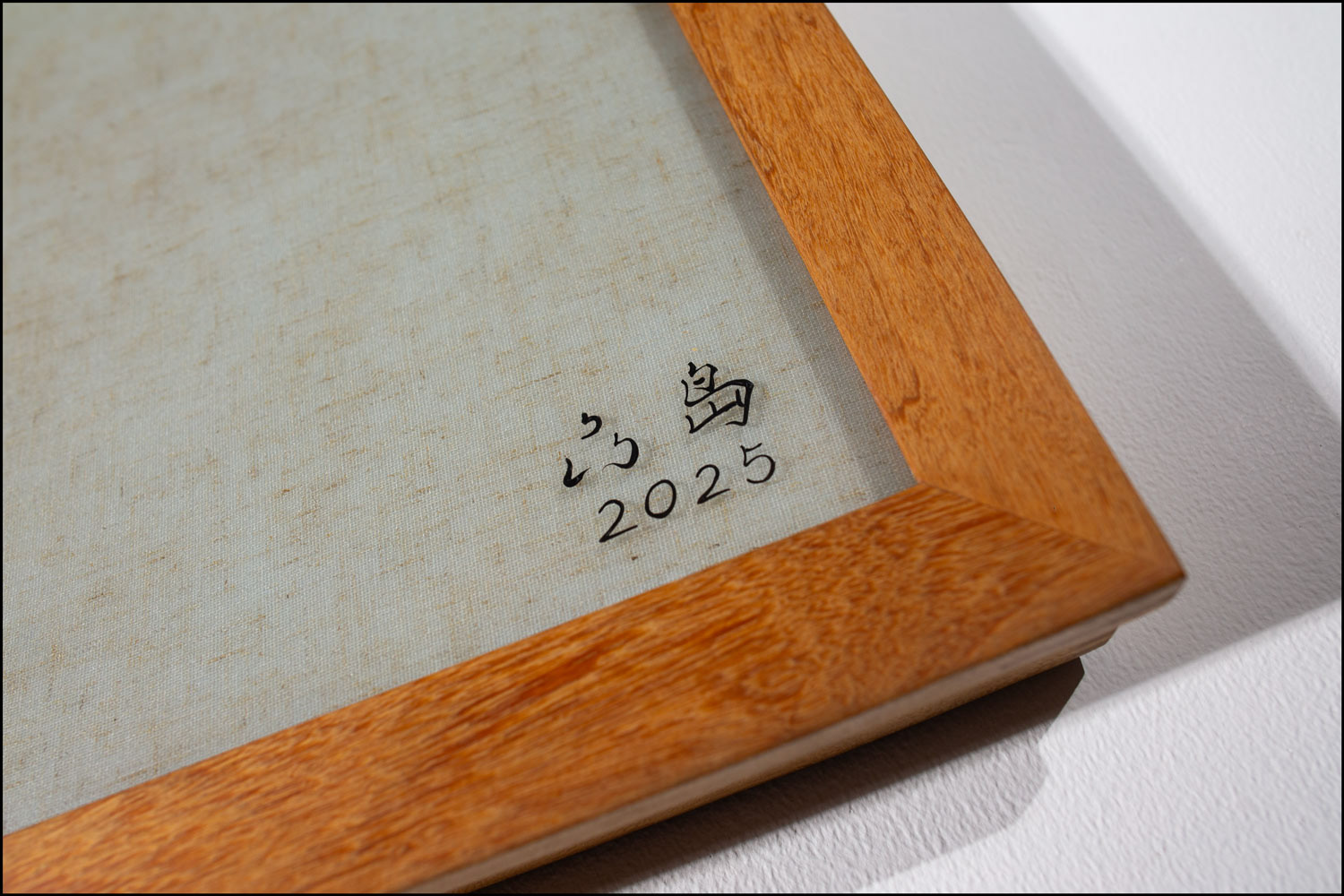

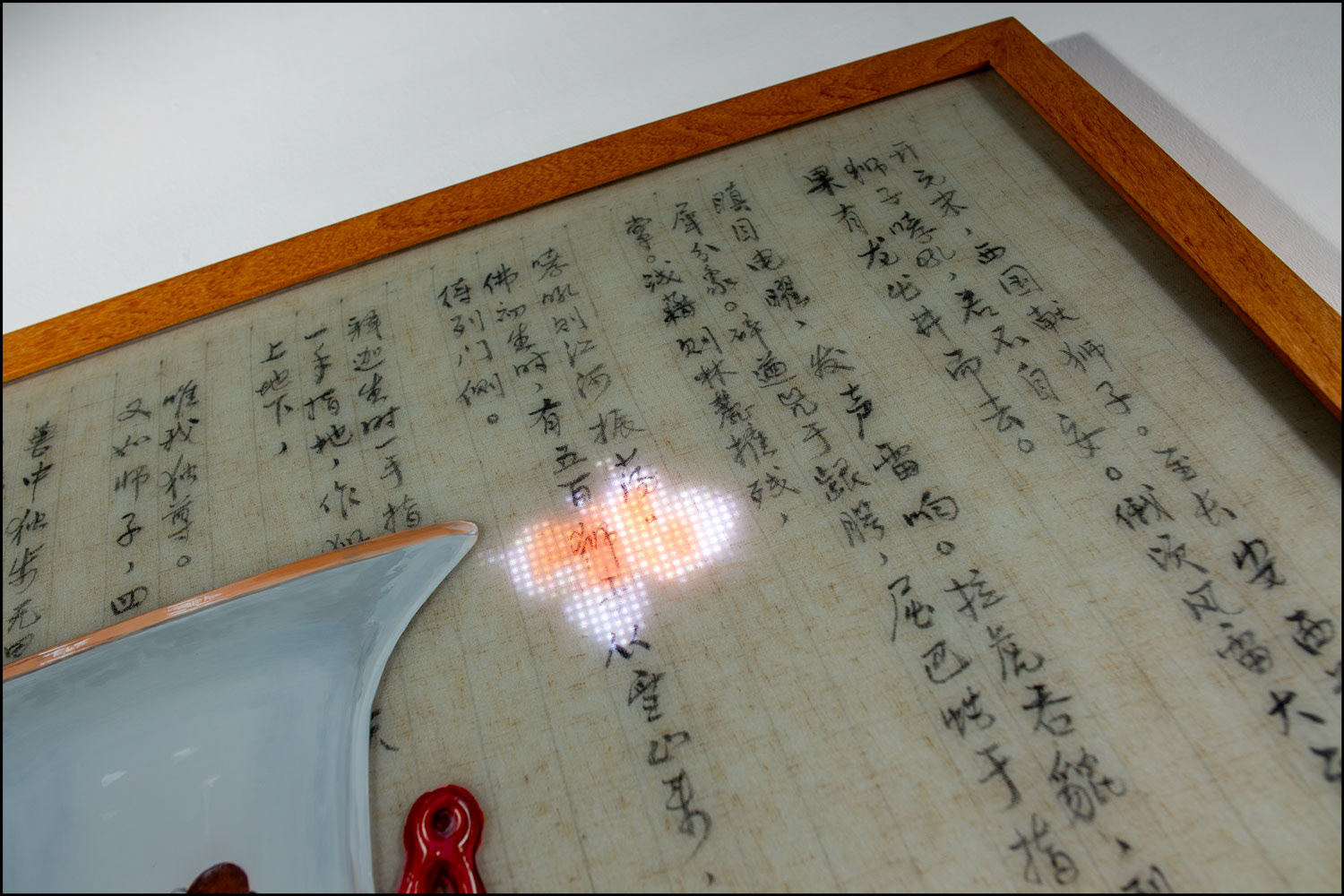

VIDEO
CALLIGRAPHY TRANSLATION
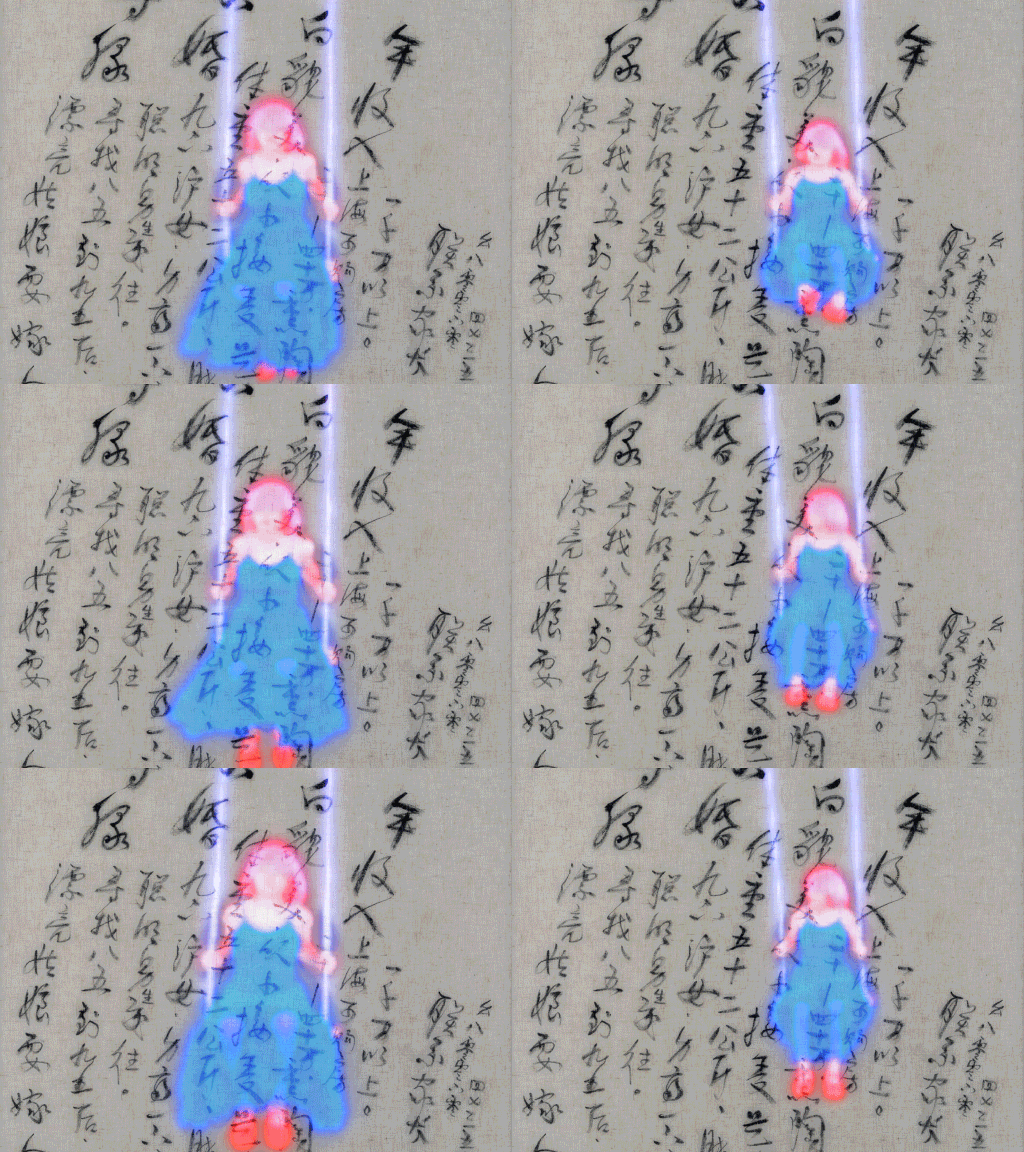
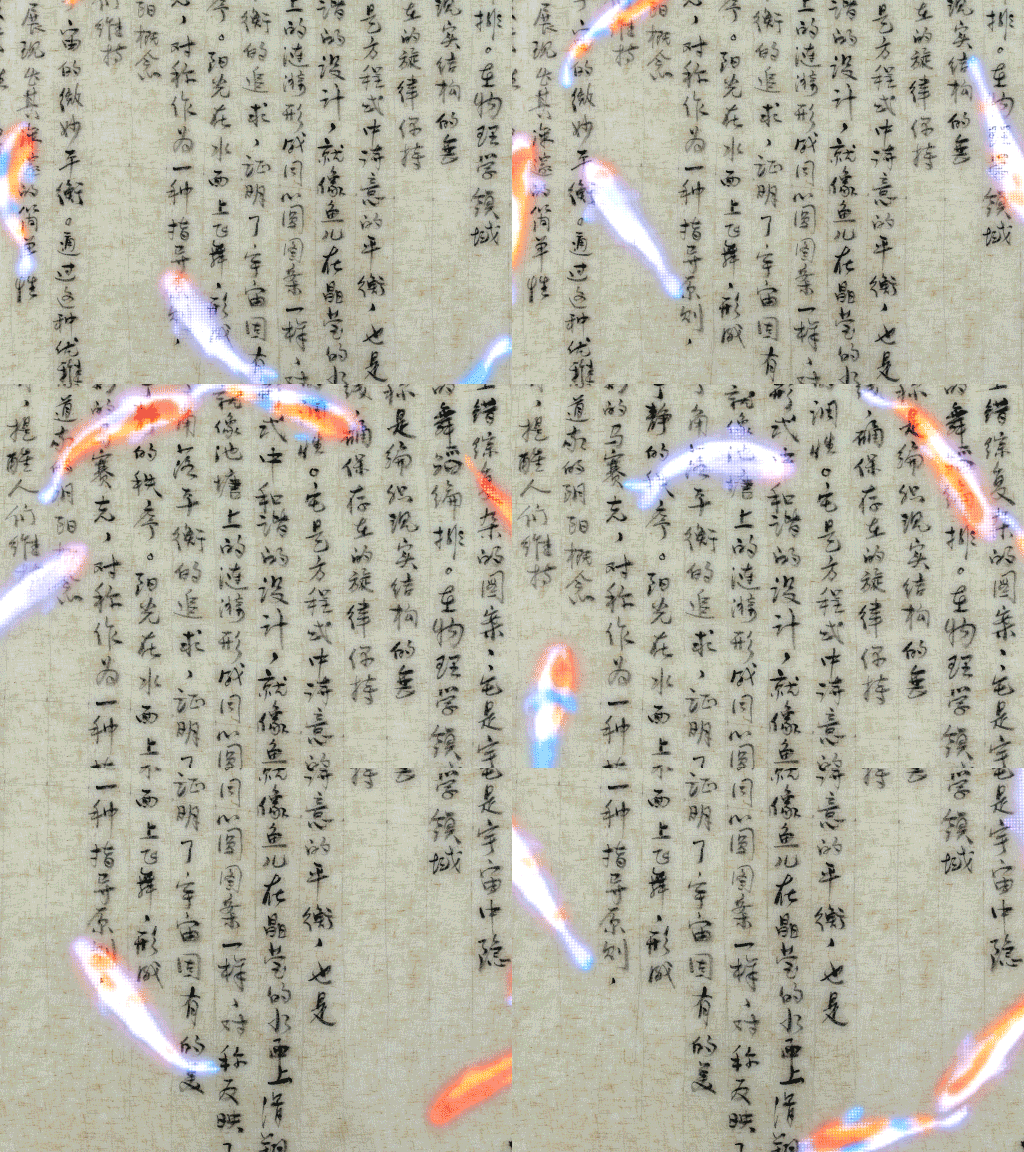
开元末,西国献狮子。至长安西道中,系于驿树。树近井,狮子哮吼,若不自安。俄顷风雷大至,果有龙出井而去。
Toward the end of the Kaiyuan era, a lion was presented as a tribute from the Western Kingdoms. On the road west of Chang’an, it was tethered to a tree at a post station. The tree stood near a well, and the lion roared as if it felt uneasy. Soon after, a violent storm of wind and thunder broke out, and indeed, a dragon emerged from the well and flew away.
瞋目电曜,发声雷响。拉虎吞貔,裂犀分象。碎遒兕于龈腭,屈巴蛇于指掌。践藉则林麓摧残,哮吼则江河振荡。
Its eyes flashed like lightning, and its roar shook the heavens. It dragged tigers, swallowed panthers, tore apart rhinoceroses, and split elephants. It crushed the mighty rhinoceros between its jaws and subdued the giant serpent with its paws. Wherever it trod, forests and hills were devastated; whenever it roared, rivers and lakes trembled.
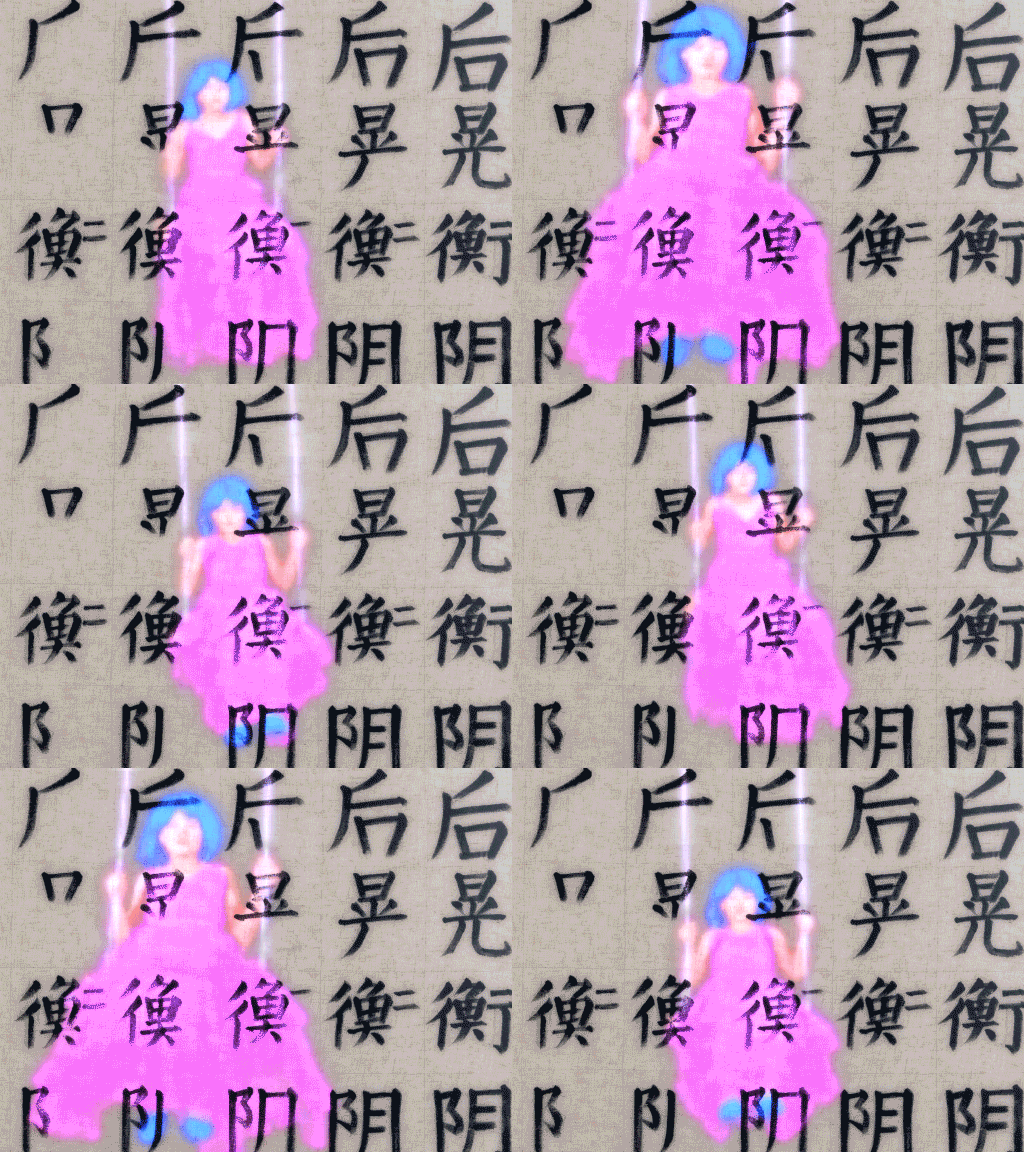
佛初生时,有五百狮子从雪山来,待列门侧。
When the Buddha was first born, five hundred lions came from the Snow Mountains and stood in ranks by the gate.
释迦生时一手指天,一手指地,作狮子吼,天上地下, 唯我独尊。
At the Buddha’s birth, he pointed one hand toward the heavens and one toward the earth, letting out a lion’s roar: “In heaven and on earth, I alone am supreme.”
又如师子,四足兽中独步无畏,能伏一切;佛亦如是,于九十六种道中一切降伏无畏故,名人师子。
Just as the lion, among four-legged beasts, strides alone without fear and subdues all others, so too does the Buddha, having subdued all ninety-six schools of thought without fear; thus he is called the “Lion of Teachers.”
狮为百兽王,诸兽见皆匿影,性最傲,遇者急俯伏,虽饿食不噬。
The lion is the king of all beasts; when other animals see it, they all hide. Its nature is supremely proud; those who encounter it immediately prostrate themselves, and even when hungry, it does not devour its prey.
太平乐, 后周武帝时造, 亦曰五方狮子舞,缀毛为狮,人居其中,像其俯仰驯押之容。二人持绳秉拂,为习弄之状。五狮子各立其方位,百四十人歌太平乐。’
The “Taiping” dance was created during the reign of Emperor Wu of the Later Zhou Dynasty; it is also known as the “Five-Direction Lion Dance.” Costumes adorned with fur represent lions, with performers inside mimicking the movements of bowing, rising, and taming the beasts. Two people hold ropes and whips, portraying the act of training them. Five lions stand in their respective directions, while one hundred and forty people sing the “Taiping” melody.
The sentences are from online research about lion's role in ancient Chinese culture and legends. They are mostly direct quotes from historical texts. It says that in ancient China, the lion was seen as the king of beasts, with a roar that shakes the heavens; a symbol of the Buddha's power in Buddhism; and was imitated in dances to pray for peace by people.